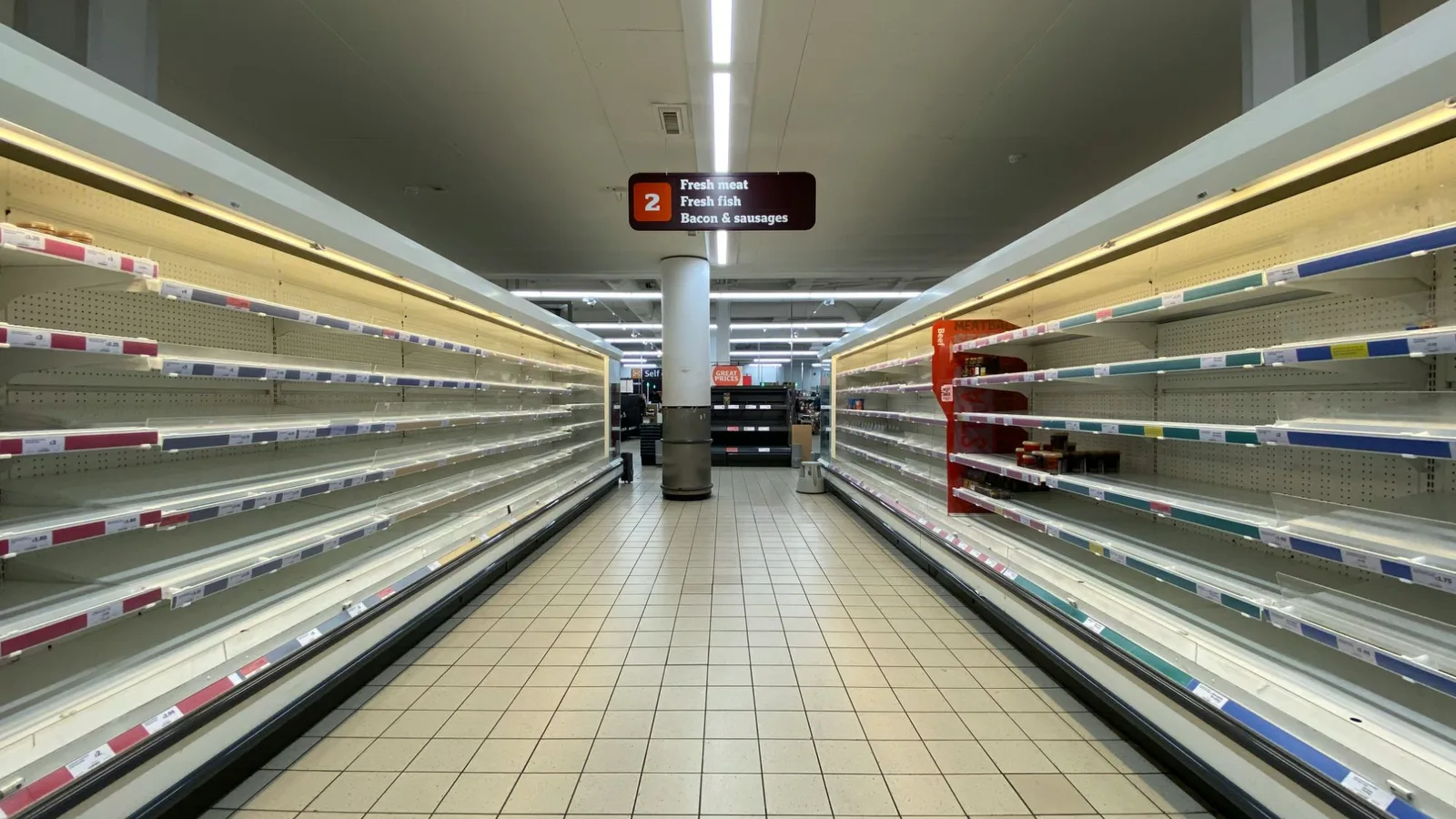
People keep asking me what’s behind the headlines. Everything seems to be going down or getting hacked, and they want to know whether they’ll be able to work normally again, and what they should be afraid of. The headlines are written to make you read the column, but they aren’t wrong, and you should be concerned. There’s also a limit to how concerned you need to be, and most of what protects you costs little more than a trip to the shops and a chat over the garden fence.
Yes, It’s Real
We’re living through a time of war. Russia’s invasion of Ukraine is in its fifth year, the United States and Israel went to war with Iran in February and have yet to agree a peace, and the House of Commons Library describes a Russian campaign of hybrid warfare across Europe that NATO says is escalating. If you’re in the West, you’re on the menu, and it isn’t going to stop any time soon.
Britain has had a bruising run already. In April 2025 a cyber attack took Marks & Spencer’s online orders down for weeks and cost the company around £300 million. The Co-op was hit in the same wave, and some of its shops ran short of stock. That September an attack stopped production at Jaguar Land Rover for over a month, and the government put up a £1.5 billion loan guarantee to keep the carmaker’s suppliers afloat. The same month, ransomware at Collins Aerospace knocked out the check-in and boarding software used at Heathrow, Brussels and Berlin, and staff checked passengers in by hand.
Not all of this is war. The National Crime Agency arrested four people over the retail attacks in July 2025, and the gang the attacks have been linked to, Scattered Spider, was after ransom money. If you’re the one looking at an empty shelf, who did it makes no difference.
Why a Hack Ends Up on Your Supermarket Shelf
Our supply chains run just in time. Nobody wants to pay to sit on stored goods, so we make things as they’re needed and ship them as they’re needed, and software does the heavy lifting of keeping it all moving. Any system with a connection to the public internet can be attacked. Overload its servers, or lock its files with ransomware, and the lorries stop knowing where to go.
We’ve seen how fast an empty shelf appears. In 2020 Covid did it with no hacker involved, and a system with no slack couldn’t cope with a few weeks of panic buying.
I’m not an economist, but the practical version is easy to see. In August 2023 a fault in the system National Air Traffic Services uses to process flight plans, not even an attack, disrupted more than 700,000 passengers on a bank holiday Monday. Take down a system like that on purpose and a country loses a day of trade. For most of us it’s inconvenient rather than dramatic: your flight moves to tomorrow, or the fridge at the supermarket doesn’t have what you came for.
Stock the Cupboard
You can’t hedge against a shortage at the source. What you can do is hold a small buffer at home. In October the government launched its Be Ready campaign, which names cyber attacks alongside severe weather and asks every household to hold three days’ worth of supplies. In practice that means tins, dried food and anything else that keeps safely for weeks, plus water and whatever medicines your household relies on.
Then think about growing some of your own. People did a lot of it in living memory: the Dig for Victory campaign turned parks and lawns into vegetable plots during the Second World War. If you’ve ever wondered about developing green fingers, this is a good reason to start. Think beyond a tray of salad leaves to tomatoes and cucumbers. What fresh food would you miss first if the shelves went bare? Tell me what you’d grow.
The Fight You Can’t See
Government Communications Headquarters (GCHQ) and the National Cyber Security Centre, which is part of it, work hard to protect us. Their fight is difficult to picture and would make dull television, though Hackers and WarGames had a go. Most of it happens out of sight until it causes something you can see and feel.
Ukraine shows what that looks like. Russia has spent winter after winter attacking Ukraine’s power stations and grid to leave as many people as possible freezing in the dark. Most of that damage comes from missiles and drones, but the cyber version has been tried too: Russian military hackers cut the power to around 225,000 customers in December 2015, and to part of Kyiv a year later. It’s horrifying, and it’s where a cyber attack ends up when it reaches the physical world.
Why Britain Is in the Firing Line
Russia and Iran are mostly busy with their main enemies: Russia with Ukraine, Iran with the United States and Israel. That spares the UK a little, but only a little. We host American air bases, to the point where British authorities uncovered a suspected Iran-backed plot against RAF Fairford in Gloucestershire, and the US has since moved aircraft out of two British bases: 12 B-1 bombers from Fairford in October, and refuelling tankers from RAF Mildenhall in November after reports of a threat from Iran. We support Ukraine with weapons and money, and Iran’s national security chief, Mohsen Rezaei, said this month that bases in Europe used to launch American strikes on Iran would be targets too.
There’s plenty to lose sleep over. It helps to remember that there are people on the front line working on our behalf, and that the rest of us can make ourselves harder to hurt.
Talk to Your Neighbours
Talking to your neighbours is the biggest thing you can do. The internet has turned a lot of us into odd sorts of introverts, but we live close together, closer than most of us notice. There are more people in my own neighbourhood than I could name, and they’re people like you and me: people you can talk to and pool resources with.
Start with the people most likely to struggle: older neighbours, and families with young children. Make sure they have the medical supplies and food they need. If you have children, think about keeping them occupied as well. A shelf of books helps, or an e-reader that’s charged and loaded before you need it.
Your Own Front Line
The number one thing you can do for your devices is install the security updates. Feature updates are another matter. New features tend to bring new bugs, so let the shiny ones wait, at least until the old version stops getting security fixes.
Then change the passwords on anything connected to the internet: the doorbell, the security cameras, the fridge and above all the television. Smart TVs carry powerful processors for streaming, and a device that’s easy to break into can be turned against other systems. In October 2016 the Mirai botnet did that with a swarm of hijacked cameras and video recorders, most of them still on their factory passwords. It flooded Dyn, a company that directs internet traffic, and took Twitter, Netflix, Spotify and Reddit offline for hours across parts of the US and Europe. Since April 2024 UK law has banned easily guessed default passwords on new connected products, but anything bought before then may still have one.
The Bottom Line
We can all play our part in keeping Britain safe. Keep a few days of supplies in the cupboard, look out for your neighbours, update your software and change your passwords.
What’s Your Experience?
What else should we be doing, as households and as a community? Tell me through social media.
If you need a hand with the updates and passwords, book a call.
Photo by John Cameron on Unsplash